
Learner-Facing Resource Design
Each resource is designed to help readers understand complex political science concepts through clear structure, guided framing, and discussion-ready prompts.
Teaching Resource Series
I used an eight-week graduate comparative politics course as a design lab for OER-informed teaching resources that organize complex academic content for learner comprehension, reuse, visual learning, multimedia explanation, data-informed comparison, institutional case analysis, policy argument, presentation design, timeline design, and discussion.
POLS Y657 was an eight-week graduate course with seven assignment products. I intentionally approached the assignments as opportunities to create portfolio-ready teaching resources rather than isolated coursework submissions.
The design challenge was to preserve graduate-level political science analysis while shaping each product for learner comprehension, reuse, accessibility, source transparency, and classroom discussion.
The strongest opportunity was to use the course as a design lab: turn complex academic work into structured, reusable, learner-facing resources.
This series began in POLS Y657: Comparative Politics at Indiana University, taught by Dr. Tuholski. I had recently completed a Creative Commons for Educators course, and my professional work includes support for OER-related projects.
Because of that context, I treated the assignments as an opportunity to practice OER-informed instructional design: Creative Commons licensing, reusable educational framing, source attribution, TASL-style image crediting, visual learning supports, data visualization, multimedia explanation, transcript support, alt text, and learner-facing discussion prompts.
The completed collection shows how graduate-level political science work can be shaped into varied instructional artifacts for reading, viewing, discussion, and reuse.
I approached the work as both comparative analysis and teaching-resource design. Instead of writing only for evaluation, I wrote and structured the materials for someone who might teach from them, adapt them, discuss them, or use them to support learner understanding.
Across the series, the design pattern emphasizes clear learning goals, key terms, structured explanation, visuals with captions and attribution, accessible formatting, transcript-supported media, data-informed comparison, institutional theory, policy recommendations, speaker-note supported research, timeline-based synthesis, references, and prompts that help readers move from information to interpretation.
Each resource is designed to help readers understand complex political science concepts through clear structure, guided framing, and discussion-ready prompts.
Course concepts are connected to historical examples, comparative questions, visual supports, and applied teaching use.
Maps, comparison charts, timelines, captions, and source notes help learners see relationships that are harder to follow through prose alone.
The series uses Creative Commons thinking, attribution practice, source transparency, and reuse-oriented design decisions.
Week 2
Comparative explainer article
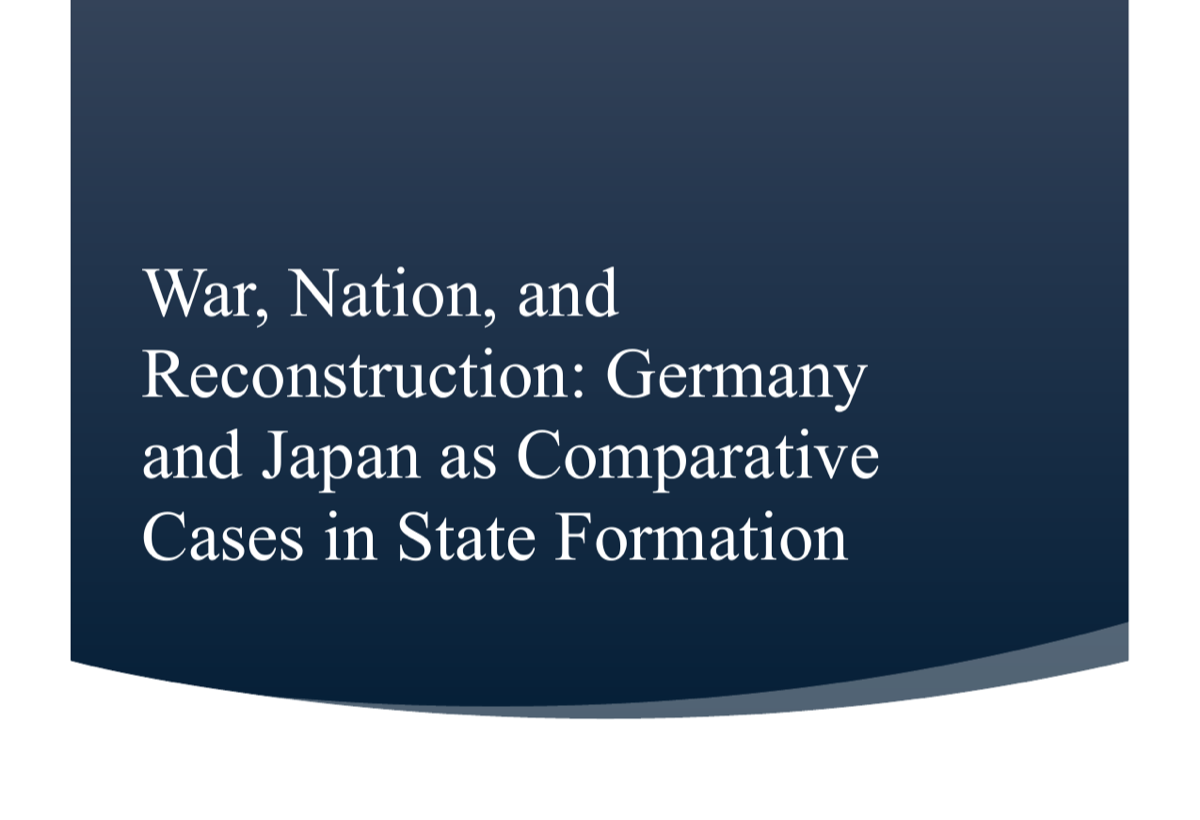
A comparative explainer article analyzing Germany and Japan as cases in state formation, nation-building, war-making, modernization, and reconstruction.
Shared as an OER-informed educational resource for learning, teaching, and discussion. Please retain author credit, source attribution, and any included licensing or credit statements when using or adapting the material.
Week 3
Comparative video podcast
A narrated comparative politics explainer examining democratic backsliding in Hungary and Turkey through competitive authoritarianism, democratic recession, authoritarian institutions, and Freedom House 2025 ratings.
Shared as an OER-informed educational resource for learning, teaching, and discussion. Please retain author credit, source attribution, and any included licensing or credit statements when using or adapting the material.
Week 4
Comparative infographic
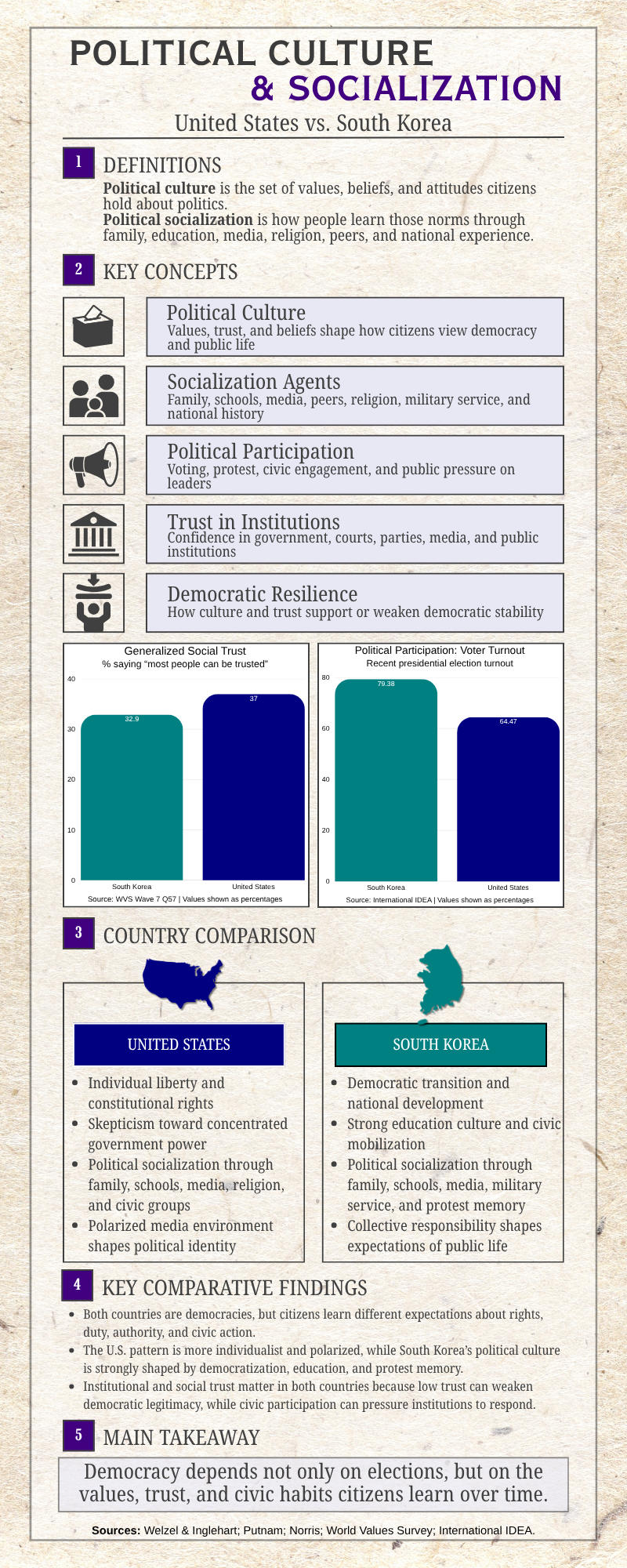
A data-informed comparative infographic and written explanation comparing political culture, political socialization, civic expectations, social trust, and voter turnout in the United States and South Korea.
Shared as an OER-informed educational resource for learning, teaching, and discussion. Please retain author credit, source attribution, and any included licensing or credit statements when using or adapting the material.
Week 5
Comparative case study
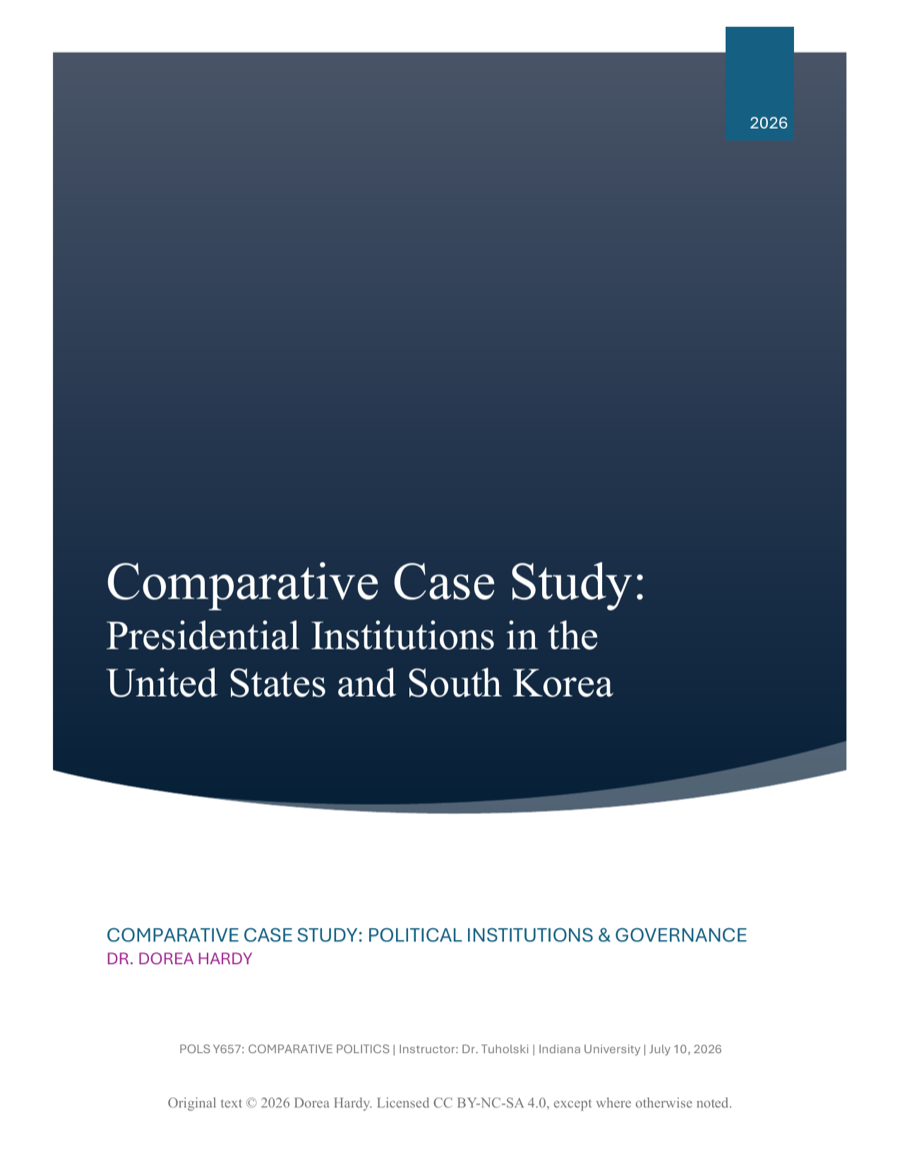
An OER-style comparative case study examining how two democratic presidential systems can share formal structures while producing different incentives and governance outcomes through historical development, constitutional design, and accountability mechanisms.
Shared as an OER-informed educational resource for learning, teaching, and discussion. Please retain author credit, source attribution, and any included licensing or credit statements when using or adapting the material.
Week 6
Comparative policy brief
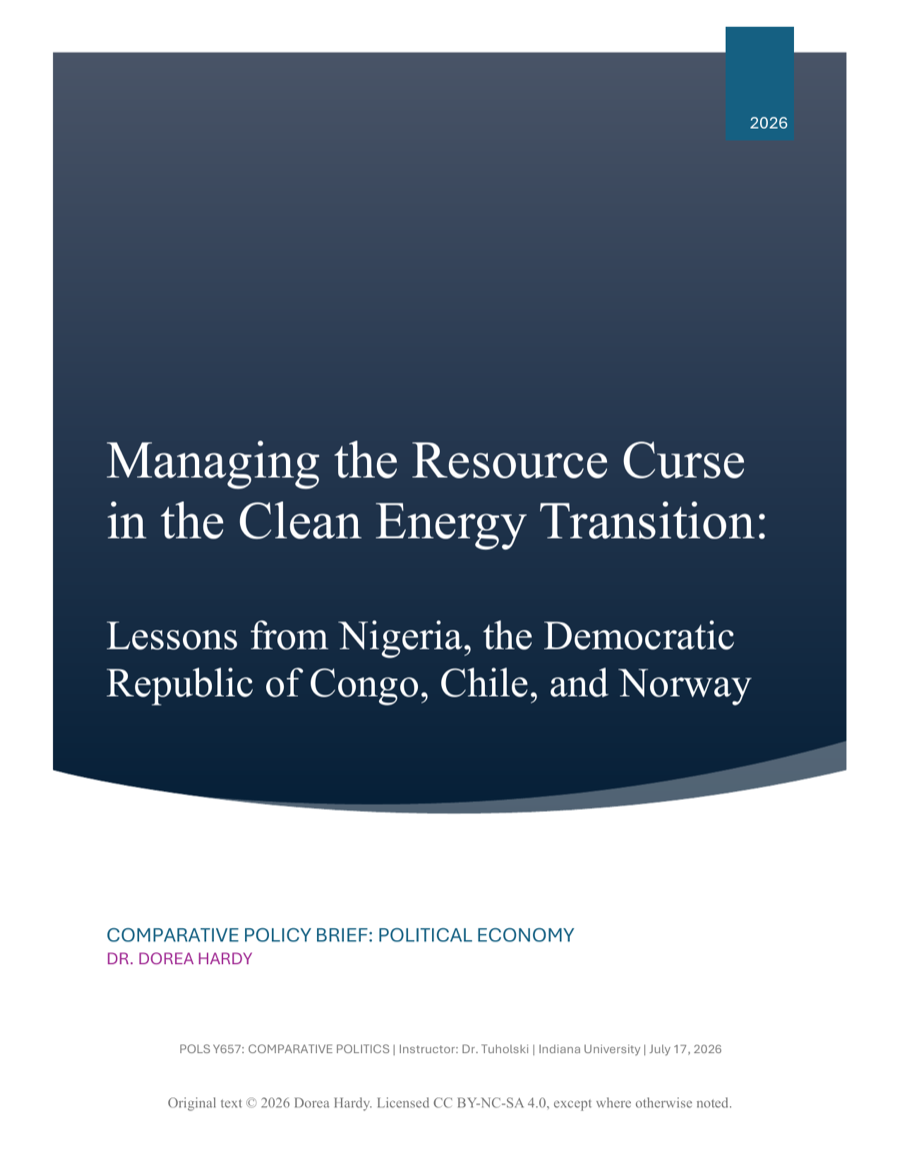
A professional policy brief comparing Nigeria, the Democratic Republic of Congo, Chile, and Norway to examine how institutions shape whether resource wealth supports public investment and sustainable development or reinforces dependency, corruption, conflict, and weak governance.
Shared as an OER-informed educational resource for learning, teaching, and discussion. Please retain author credit, source attribution, and any included licensing or credit statements when using or adapting the material.
Week 7
Comparative presentation
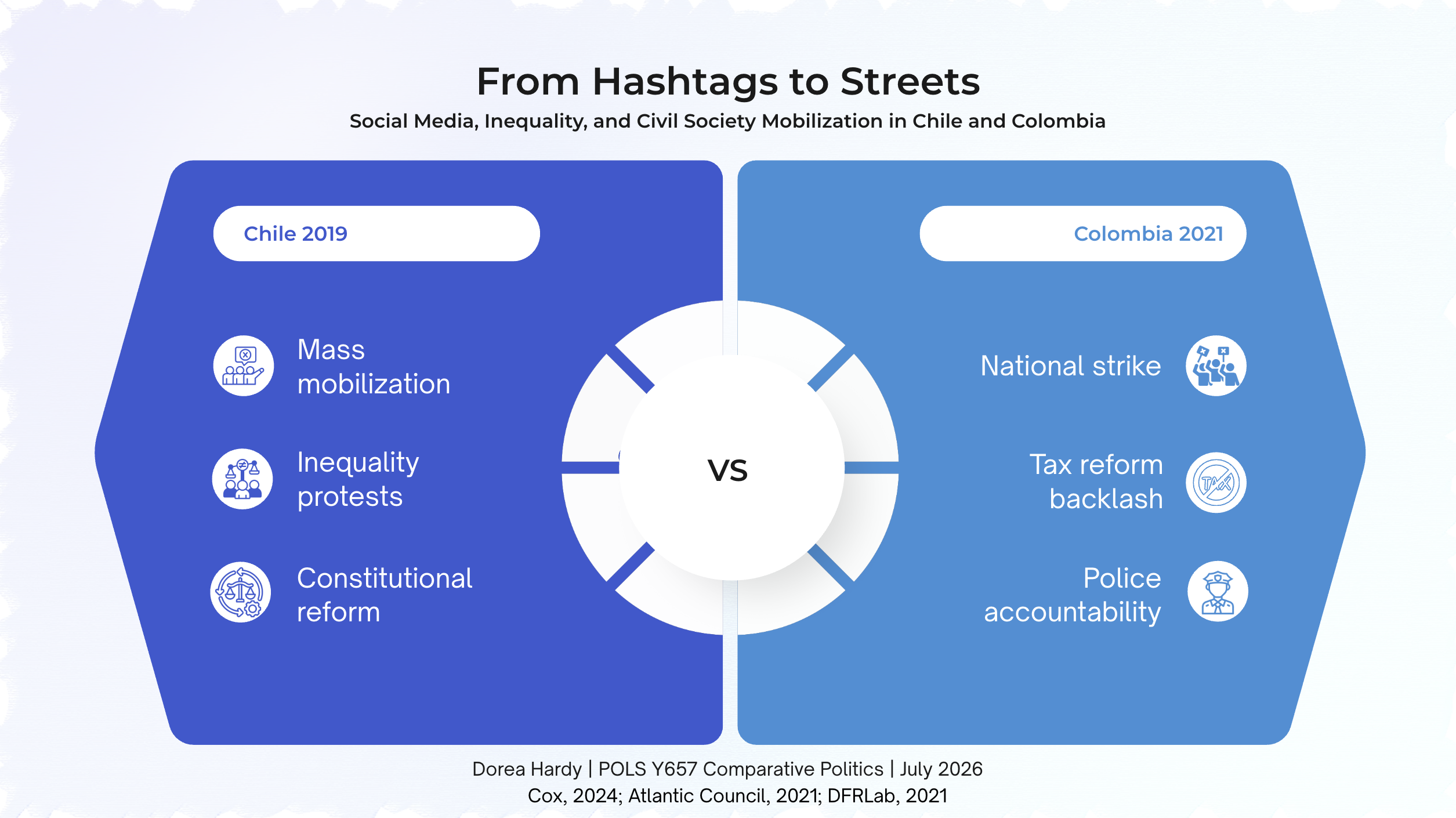
A graduate-level comparative presentation examining social media, inequality, and civil society mobilization in Chile's 2019 social uprising and Colombia's 2021 national strike, with concise visual slides supported by detailed speaker notes.
Shared as an OER-informed educational resource for learning, teaching, and discussion. Please retain author credit, source attribution, and any included licensing or credit statements when using or adapting the material.
Week 8
Comparative timeline and analysis
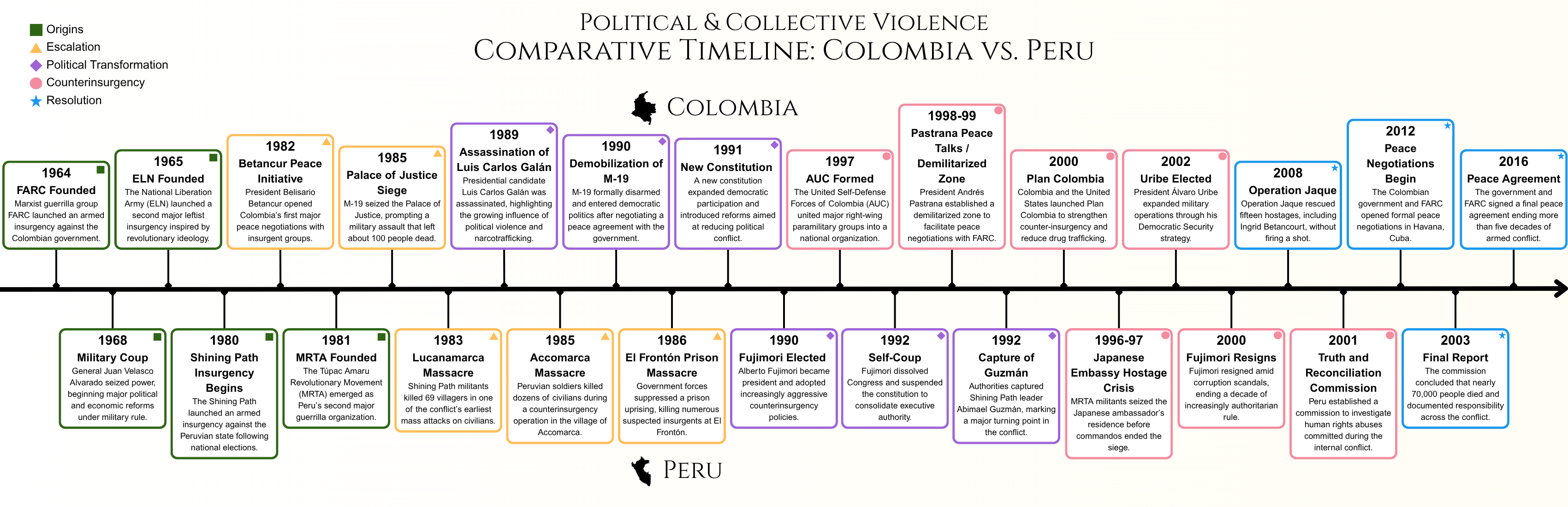
A culminating comparative timeline and written analysis examining political and collective violence in Colombia and Peru through recurring phases of origins, escalation, political transformation, counterinsurgency, and resolution.
Shared as an OER-informed educational resource for learning, teaching, and discussion. Please retain author credit, source attribution, and any included licensing or credit statements when using or adapting the material.
This series demonstrates how I translate complex academic material into structured, reusable, accessible, and learner-centered educational design.
The Week 2 resource, War, Nation, and Reconstruction, compares Germany and Japan as cases in state formation and nation-building. The Week 3 resource, Democracy in Reverse, uses a narrated video-podcast format to explain competitive authoritarianism and democratic backsliding in Hungary and Turkey. The Week 4 resource compares political culture and socialization in the United States and South Korea through a data-informed infographic format. The Week 5 resource compares presidential institutions in the United States and South Korea through an OER-style institutional case study. The Week 6 resource applies a professional policy brief format to resource governance and the clean energy transition. The Week 7 resource uses a concise visual presentation with detailed speaker notes to compare civil society mobilization in Chile and Colombia. The Week 8 resource concludes the series with a comparative timeline and written analysis of political and collective violence in Colombia and Peru.
The Week 3 podcast received a 96/100. Instructor feedback praised the central question, the comparison of different mechanisms of backsliding, and described it as one of the strongest submissions in the class.
The Week 4 infographic received 45.5 out of 50 points. Instructor feedback described the comparison as thoughtful and well-organized, especially in showing how citizens are socialized into different expectations around liberty, authority, public pressure, civic duty, and participation.
Instructor feedback on the Week 5 case study praised the visual and structural design, the comparison of presidential term structures, the use of South Korea's 1987 democratic transition as a critical juncture, and the nuanced treatment of impeachment as both institutional strain and democratic resilience.
The Week 6 policy brief received 49 out of 50 points. Instructor feedback described the brief as professional enough to be useful in a development policy setting and praised the comparative structure, policy recommendations, and integration of political economy literature.
The Week 7 presentation received 50 out of 50 points. Instructor feedback praised the efficient visual design, the consistency of the central argument, the careful treatment of contested political outcomes, and the depth provided through the speaker notes.
The Week 8 culminating assignment received 49 out of 50 points. Instructor feedback highlighted the strength of the comparative argument, the complementary relationship between the visual timeline and written analysis, the phased organization, and the discussion of state capacity and democratic governance.
The portfolio value is not only the graduate-level analysis. It is the intentional design practice behind the work: framing, sequencing, accessibility, multimedia communication, data-informed visual design, institutional explanation, policy communication, presentation design, timeline synthesis, attribution, and learner support.
Connect
Connect about instructional design, OER-informed resource development, accessibility, professional writing, or teaching and learning projects.